
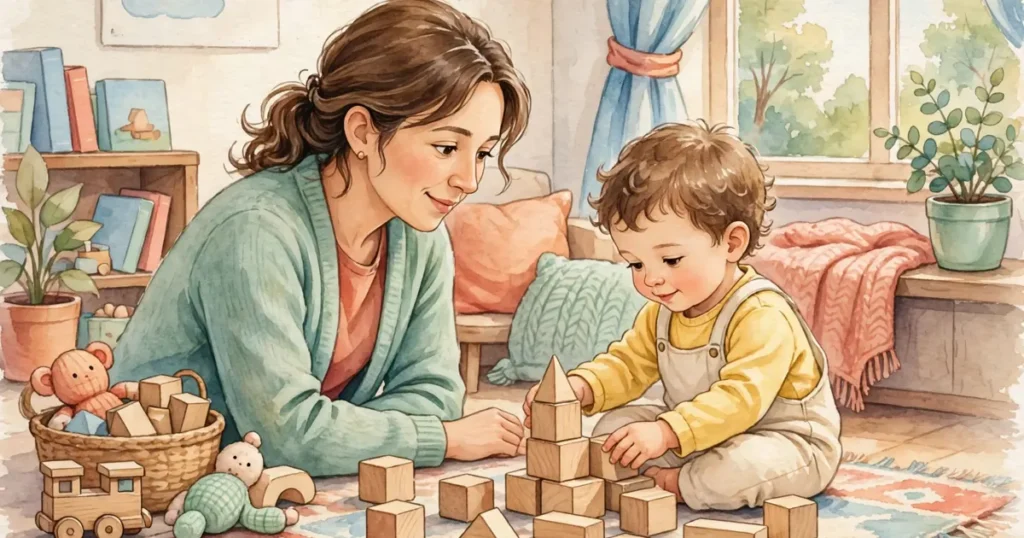
The most common signs of speech delay in toddlers are having noticeably fewer words than other children of a similar age, making slow progress over time, and being hard for familiar adults to understand. Other signs can appear in understanding, in play and interaction, and in how a toddler uses gestures to communicate. One sign on its own rarely tells the whole story — the pattern, and how it changes over time, matter most.
If you are worried about your toddler’s talking, you are not alone. Many parents notice something small first — a word that has not arrived, or a feeling that their child is frustrated when trying to share an idea. This page explains the signs in general terms. It cannot tell you whether your own child has a delay — only an assessment can do that — but it can help you feel clearer about your next step.
Key Takeaways
- Early signs usually appear across talking, understanding, play and interaction — not in words alone.
- Few words, slow progress and hard-to-understand speech are the most common signs.
- Gestures and pointing matter, because they are part of how toddlers share messages.
- Hearing plays a big part in learning to talk, so hearing-related signs are worth noticing too.
- Steady progress over time matters more than any single sign.
- If you are worried, asking for advice is always a reasonable step.
On this page
- How toddlers communicate at this stage
- Signs in understanding: the listening side
- Signs in talking: few words, slow progress, hard to understand
- Signs in interaction and play
- Gestures and other ways toddlers communicate
- Hearing-related signs to notice
- Why progress over time matters more than any single sign
- What a speech delay is not
- What you can do while you wait for advice
- When to seek help
- Questions to ask a therapist
- Frequently asked questions
- Related guides
How toddlers communicate at this stage
Toddlers communicate in many ways at once, and talking is only one of them. At this stage, communication usually includes sounds, gestures, facial expressions, single words and, gradually, short combinations of words. Understanding grows fast too: toddlers learn the names of familiar people and things, follow everyday routines, and begin to make sense of simple instructions within those routines.
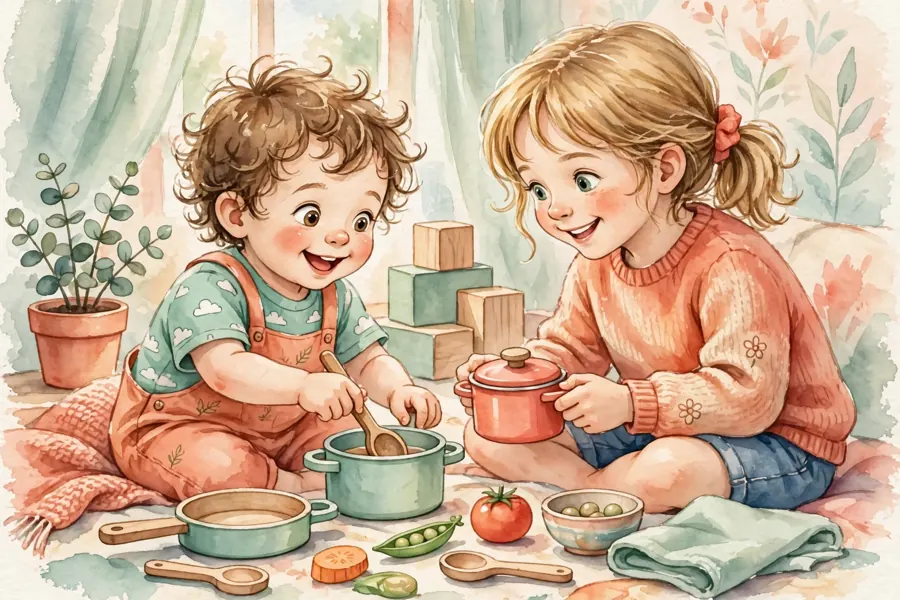
Play is part of communication as well. Toddlers explore toys, copy everyday actions like stirring a pretend cup of tea, and share attention with adults — looking at something, then looking back at you. This sharing of attention is sometimes called joint attention, and it is one of the ways early words are learned.
Every toddler moves at their own pace, and two children in the same family can talk quite differently. The signs below are therefore described generally: compared with other children of a similar age, and with your own child’s progress over recent months.
Signs in understanding: the listening side
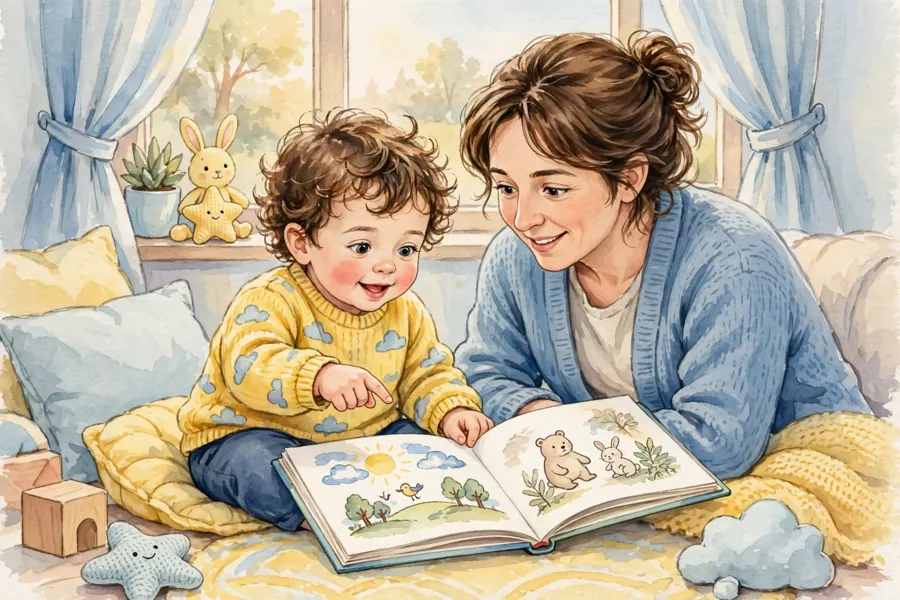
Understanding language is called receptive language — the words, questions and instructions a child takes in and makes sense of. This side is easy to miss, because toddlers cannot always show what they understand. Parents may notice that their toddler:
- Seems unsure about familiar words that other children of a similar age respond to.
- Finds simple instructions hard to follow without a gesture or a familiar routine to help.
- Appears not to notice when you call their name, even when not absorbed in play.
- Watches other children before joining in, as if working out what has been asked from the situation rather than the words.
- Manages in familiar routines but becomes lost when words are used in a new situation.
Understanding is the foundation talking is built on — a toddler who is not yet making sense of a word cannot be expected to use it. If understanding seems limited too, tell the professional you see, because support would need to build both halves together.
Signs in talking: few words, slow progress, hard to understand
Talking — using words and speech to send messages — is called expressive language. This is the side parents usually notice first, because it is the side you can hear.
Having noticeably few words
A toddler may have only a small set of words they use reliably, while other children of a similar age seem to add new words often. Their words may be mostly names for favourite things, with fewer action words (like “go”) or social words (like “more”). Some understand a great deal but say very little — a common pattern.
Making slow progress over time
Just as important as how many words a toddler has is whether new words keep arriving. Parents often say progress feels “stuck”: the same few words week after week, word combinations slow to appear, or new sounds that do not become regular. Slow, steady progress is a very different picture from progress that has levelled off.
Being hard to understand
While toddlers learn sounds, their speech is naturally unclear, and young children simplify words in predictable ways. Family members often understand far more than visitors, because they know the child’s personal version of each word. A sign worth noticing is when even familiar adults regularly cannot work out what is being said, or clarity does not improve over time. Frustration often comes with this: a toddler who cannot make themselves understood may become upset or give up trying.
None of these signs, on their own, can say why a toddler is talking later or less clearly than others. They are signals that asking for advice is sensible, so the full picture — understanding, talking, play, interaction and hearing — can be looked at together.
Signs in interaction and play
Communication is about connecting with people, not only about words. Parents may notice that their toddler:
- Plays mostly alone and seems less interested in joining other children’s games.
- Finds back-and-forth interaction hard — for example, taking turns in a simple game.
- Rarely brings toys to show an adult, or does not often share enjoyment of something.
- Has a narrower range of play than other children of a similar age — for example, mostly lining up or carrying toys rather than using them in pretend ways.
- Copies fewer actions, sounds or words than you might expect.
Play and communication grow together: through play, toddlers practise turn-taking, copying, pretending and sharing ideas. A toddler whose play looks different may simply be developing in their own way, but play is always part of the picture a professional will ask about.
Gestures and other ways toddlers communicate
Long before words, toddlers communicate with their whole bodies, and gestures remain important alongside early talking. Waving, reaching, nodding and pointing are all meaningful messages. Pointing is especially important: pointing to ask for something, and pointing to share interest (“look at that!”), shows a toddler understands communication is about sharing ideas.
Signs here might include a toddler who uses very few gestures, who leads an adult by the hand instead of pointing or showing, or who relies on crying because other ways of getting the message across feel hard. The opposite pattern is reassuring: a toddler who points, shows and finds creative ways to communicate is showing strong foundations, even if their words are still few.
Some toddlers also use supports such as signing or pointing to pictures. These sit alongside speech rather than replacing it, and can reduce frustration while talking develops.
Hearing-related signs to notice
Children learn the sounds and words of language by hearing them, clearly and often. A toddler who is not hearing speech clearly may learn words more slowly or say sounds less clearly, so hearing is always part of the picture when talking seems delayed.
A young child’s hearing can vary. Temporary dips are common alongside colds and ear infections, and fluid behind the eardrum can dull sounds for a while, a little like listening with fingers in your ears. Signs that hearing is worth checking include a toddler who:
- Often does not respond when called from another room.
- Frequently seems to mishear, or needs things repeated.
- Watches faces very closely when listening.
- Seems to hear well on some days and poorly on others.
- Sounds less clear than expected, as if copying a muffled version of words.
None of these signs proves a hearing difficulty — hearing is only one possible piece of the picture. If you notice them often, arranging a hearing check through your doctor or local health service is a sensible step.
Why progress over time matters more than any single sign
It is natural to look for one clear sign that answers “is this a delay or not?” In truth, no single sign can do that job. Toddlers are individuals: one may say little but understand everything; another may have many words but find interaction harder. Development also happens in bursts and plateaus.
What matters most is the direction of travel over time:
- Is your toddler’s understanding slowly growing?
- Are new words, sounds or combinations appearing, even slowly?
- Is play becoming more varied and more shared?
- Is your toddler finding more ways to get messages across?
Steady movement forward, even if slower than other children’s, is a different picture from progress that has stalled — or from skills going backwards. A few simple notes over a month or two can reveal the pattern, and give a professional a helpful starting point.
What a speech delay is not
Worried parents often meet unhelpful explanations. It may reassure you to know what a speech delay is not:
- It is not shyness. A shy toddler may talk less in new places, but shyness alone does not explain few words at home, slow progress or difficulty understanding.
- It is not caused by bilingualism. Learning two or more languages does not cause difficulties. Mixing languages is normal, and a genuine difficulty appears in every language, not just one.
- It is not laziness. Toddlers are not “too lazy to talk”. Talking is a complex skill children are strongly motivated to learn. A toddler who is not talking needs understanding and support, not pressure.
- It is not caused by parenting. Delays happen in loving, talkative families too. What parents do can support development — a hopeful message, not a burden.
- It is not something to simply wait out. Some late talkers catch up; others continue to need support. Since no one can tell in advance which path a child will take, asking early is wiser than waiting.
What you can do while you wait for advice
Seeking advice can take a little time, and there is plenty you can do in daily life while you wait. These ideas are not a treatment and do not replace an assessment — they are gentle, everyday ways to give your toddler rich chances to communicate.
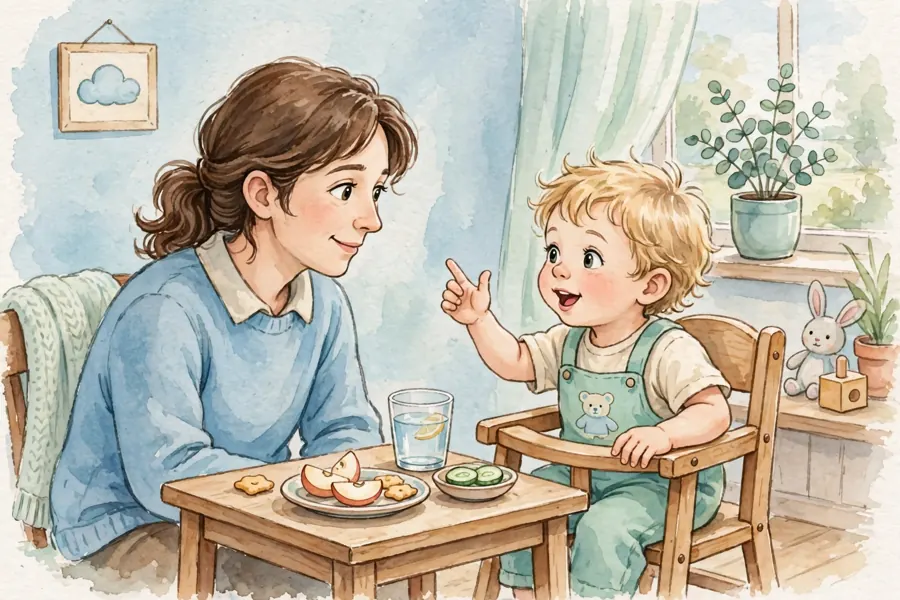
- Talk during routines. Meals, bath time and getting dressed are full of repeated words. Name things and keep sentences short.
- Wait and give time. After you speak, pause and look expectantly. Toddlers need time to understand and respond.
- Offer choices. Holding up two options — “the apple or the banana?” — gives a reason to communicate and the words needed.
- Expand what they say. Repeat their message back and add a little. If they say “car”, you might say “yes, a red car”.
- Comment more than you question. A stream of “what’s this?” can feel like a test. Comments — “that tower is so tall” — keep talk flowing.
- Share books, songs and rhymes. Point at pictures, talk about what you see, and enjoy favourites again and again.
- Respond to every attempt. A look, a point, a sound, a sign or a word — responding warmly teaches your toddler that communicating works.
Little and often, woven into normal family life, is the pattern that helps. If your toddler becomes frustrated, keep things light and playful.
When to seek help
You know your toddler well, and your instinct that something may need a closer look is worth trusting. It is worth seeking advice if:
- Your toddler has noticeably fewer words than other children of a similar age, or new words arrive very slowly.
- Progress seems to have stalled — talking, understanding or play is not moving forward.
- Familiar adults regularly cannot understand what your toddler says.
- Understanding of everyday words, questions or instructions seems limited.
- Your toddler uses very few gestures, or seems less interested in interacting and playing with others.
- Your toddler becomes frustrated, upset or withdrawn when trying to communicate.
- You have concerns about hearing as well as talking.
- You simply feel worried. You do not need to be certain, or to wait for a particular age or stage.
One pattern deserves prompt advice at any age: losing skills. If your toddler stops using words, sounds or ways of interacting they had before, seek professional advice promptly.
One situation is an emergency. If a child suddenly loses speech, their speech suddenly becomes slurred or very hard to understand, their face suddenly droops on one side, or they have sudden weakness, choking or difficulty breathing, call your local emergency number immediately.
The usual first step is to talk to your child’s doctor or another health professional, or to a health visitor or early-years teacher if you have one. You can also contact a speech and language therapist directly. For general information, visit the World Health Organization and the American Speech-Language-Hearing Association (ASHA), or follow your national health authority’s guidance.
Questions to ask a therapist
If you arrange an assessment or a first appointment, these questions can help you feel prepared:
- What will the assessment involve, and is there anything we should bring or prepare?
- What are my toddler’s communication strengths, and which areas need the most support?
- Should my toddler’s hearing be checked, and how do we arrange that?
- What can we do at home, within our everyday routines, to support our toddler’s communication?
- What changes should we watch for over the coming months, and when should we seek advice again?
Frequently asked questions
My toddler understands everything but says very little. Is that a concern?
This is a common pattern. Understanding more than you can say is normal, and strong understanding is a real strength. Even so, if talking is noticeably behind other children of a similar age, it is worth asking for advice.
Can a speech delay sort itself out?
Some toddlers who talk late catch up in their own time; others continue to need support, and no one can tell in advance which path a child will take. That is why asking for advice is wiser than waiting — it gives you information without committing you to therapy.
Does using gestures or signing mean my toddler will not bother to talk?
No. Gestures, signing and picture supports sit alongside speech rather than replacing it. They give a toddler a way to communicate right now, which reduces frustration, while speech continues to develop.
Should we stop speaking our home language and use only one language?
No. Speaking two or more languages does not cause speech or language difficulties, and children learn most from rich, natural talk in the language their family speaks best. Keep chatting, reading and singing in the language you are most comfortable in. If a difficulty is present, it will show in every language.
My toddler talks at home but not at nursery. What does that mean?
Toddlers often talk most where they feel most comfortable, and being quieter in a new setting can be part of settling in or a shy temperament. Mention it when you seek advice, and share what your toddler’s communication looks like at home.
How do I arrange an assessment for my toddler?
Start with your child’s doctor or another health professional, or ask your health visitor or early-years teacher about the local route. In many places you can also contact a speech and language therapist directly. The assessment is friendly, usually involving play, observation and talking with you.
Related guides
- Child speech and language development: a complete guide for parents
- Late talker or speech delay? How to tell the difference
- Support for children and parents: the For Kids and Parents hub
- Speech and language therapy services for children
- Browse all conditions and topics
A gentle next step
Noticing the signs is already a caring step, and you do not have to work out what they mean on your own. If you would like to talk about your toddler’s communication, you are very welcome to get in touch online. There is no obligation and no pressure: just a friendly first conversation, at your pace.
By Hamayal Adnan, Speech-Language Pathologist
This article is for general educational purposes only and is not medical advice. It does not replace an assessment by a qualified speech and language therapist or other healthcare professional. Every person is different. If you have concerns about speech, language, feeding or swallowing, please seek professional advice. In an emergency, call your local emergency number.