

Paediatric feeding difficulties are challenges with eating, drinking and swallowing in babies and children. They range from common fussy or picky eating patterns to difficulties with chewing, swallowing safely, or accepting different food textures. A speech and language therapist with feeding expertise is one of the professionals who can assess how a child eats and drinks and advise on support.
Mealtimes are meant to be ordinary, sociable parts of family life — so when eating is hard work for your child, it can affect the whole family. You might find yourself dreading meals, cooking several different dishes, or worrying about whether your child is eating safely and enough. This guide explains, in plain language, how feeding skills develop, the different kinds of feeding difficulty, the signs worth noticing, and what assessment and support usually involve. It cannot say what is behind your own child’s difficulties — only an assessment can do that — but it can help you understand the landscape and feel clearer about your next step.
Key Takeaways
- Feeding is a set of skills — sucking, chewing, moving food around the mouth and swallowing safely — that develop gradually through childhood, at each child’s own pace.
- Difficulties can involve chewing skills, sensory responses to textures and tastes, swallowing safety, appetite, or the patterns and feelings around mealtimes — often more than one of these at once.
- Fussy eating is common in young children. Difficulties that affect safety, growth, variety or family life are worth assessing.
- Coughing, choking or a wet-sounding voice during or after meals can be signs that swallowing needs a closer look.
- Only follow food, drink or mealtime changes that a professional has recommended for your child after an assessment.
- If you are worried about your child’s eating or drinking, asking for advice is a sensible step.
On this page
- How feeding skills develop
- The different kinds of feeding difficulty
- Fussy eating or a feeding difficulty?
- Signs parents often notice
- Swallowing safety in plain language
- Who can help
- What a feeding assessment involves
- Supporting mealtimes at home
- When to seek help
- Questions to ask a therapist
- Frequently asked questions
- Related guides
How feeding skills develop
Eating and drinking look simple, but they are complex skills that take time to learn. A child has to coordinate sucking, biting, chewing, moving food around the mouth, swallowing and breathing — all in the right order, many times a day. These skills develop in a broad sequence, described below, but children move through the stages at very different speeds. Think of this as a map of the territory, not a timetable to measure your child against.
Starting with sucking
Babies begin life feeding on milk, and sucking is the first feeding skill. In the early weeks, sucking is largely a reflex — an automatic pattern. Over time it becomes stronger and better coordinated, so that a baby can suck, swallow and breathe in a steady rhythm, pause for breaths, and feed more efficiently. Comfort, alertness and practice all play a part in this early learning.
Moving on to solids
When solid foods are introduced, a whole new set of skills begins. A baby learns to take food from a spoon, move it around the mouth with the tongue, and swallow it. Early on, food may be pushed back out by the tongue — a normal part of learning. Gradually, the tongue starts moving food from side to side, towards the chewing surfaces of the gums and, later, the teeth.
Learning to chew
Chewing develops step by step. It begins with simple up-and-down jaw movements, sometimes called munching, and matures into a circular, grinding pattern that can handle firmer and chewier foods. The tongue, lips and cheeks all help: the lips keep food in, the cheeks hold food over the teeth, and the tongue gathers chewed food together ready for swallowing. These movements keep becoming stronger and better coordinated throughout early childhood.
Managing different textures
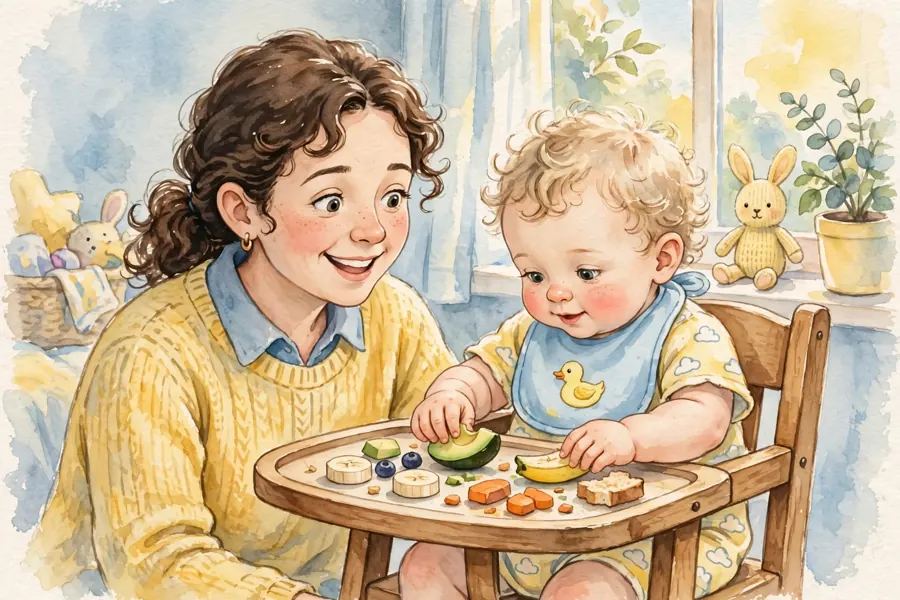
Alongside chewing, children learn to manage foods with different textures — smooth foods, mashed foods with soft lumps, chopped family foods, and foods that combine textures, such as a soup with pieces in it or a crunchy outside with a soft middle. Each new texture asks a little more of the chewing and swallowing system, and children typically need repeated, relaxed chances to meet a texture before it feels familiar.
Drinking from cups
Drinking skills grow too. Children move from sucking milk to sipping from cups — often a lidded or free-flow cup first, then an open cup, and straws as another skill along the way. Drinking from a cup asks for lip control, careful sipping and good timing between swallowing and breathing, and spills are a normal part of learning.

Why pace varies
Many things can influence the pace of feeding development: a child’s general development, their health, early feeding experiences, and how their senses respond to tastes and textures. Some children move through these stages quickly; others take much longer, and some need support along the way. A slower pace on its own does not tell you how a child will do later — what matters is the pattern over time, and whether feeding is safe, comfortable and moving forward.
The different kinds of feeding difficulty
Feeding difficulties are not one single thing. Different children struggle in different ways, and many children have a mixture. Understanding the kinds of difficulty can help you make sense of what you are seeing — and of what a professional is describing after an assessment.
Chewing and oral-motor skills
“Oral-motor” simply means the movements of the mouth — the lips, tongue, jaw and cheeks. A child with oral-motor difficulties may find chewing tiring, struggle to move food around the mouth, or have trouble gathering chewed food together for swallowing. Food may collect in the cheeks, fall out of the mouth, or be swallowed in pieces that are not well chewed. Because the same mouth movements are also used for speech, oral-motor difficulties sometimes sit alongside speech difficulties.
Sensory responses to textures and tastes
Eating is a full sensory experience: taste, texture, smell, temperature and even the look of food all matter. Some children are highly sensitive to these sensations. A texture that most people barely notice may feel overwhelming to them, and they may gag, refuse whole groups of foods, or accept only very predictable foods that feel the same every time. Other children seek out strong sensations, preferring very crunchy or strongly flavoured foods. Sensory responses are a common part of the picture for children with developmental differences, and they are a genuine experience for the child — not stubbornness or bad behaviour.
Swallowing safety
For some children, the difficulty is in the swallow itself: the timing and coordination of moving food or drink from the mouth to the stomach while protecting the airway. This is covered in more detail in the swallowing safety section below. Difficulties with swallowing safety are sometimes called dysphagia — the professional term for swallowing difficulties — and they need professional assessment.
Appetite and medical contributors
Appetite and comfort play a part too. In general terms, health issues such as reflux (stomach contents coming back up, which can be uncomfortable), constipation, food allergies or intolerances, breathing difficulties, and longer-term health conditions can all affect how a child feels about eating, or how well feeding goes. Feeling full quickly, discomfort during or after meals, or simply not feeling hungry can all reduce a child’s interest in food. These medical contributors need review by the child’s doctor, and feeding support works best alongside that medical care.
Patterns around mealtimes
Finally, there is the pattern of behaviour and feelings around meals. A child who has found eating hard, uncomfortable or frightening in the past may become anxious or avoidant at the table — turning away, clamping the mouth shut, or becoming distressed when food appears. Well-meaning pressure to eat can accidentally strengthen these patterns, because meals start to feel like a test. Behaviour around food is a form of communication: it usually tells us something about what the child is experiencing.
| Area | What you might notice | What support can involve |
|---|---|---|
| Chewing and oral-motor skills | Food collected in the cheeks, chewing that tires quickly, food falling from the mouth | An assessment of mouth movements and chewing; any activities taught and supervised by a qualified therapist |
| Sensory responses | Gagging at certain textures, accepting only very predictable foods, strong reactions to smells or mixed textures | Gradual, pressure-free exploration of foods, at the child’s pace, with guidance from a professional |
| Swallowing safety | Coughing or choking at meals, a wet or gurgly voice after swallowing | A swallowing assessment; recommendations made only for your child, after assessment |
| Appetite and health | Low interest in food, discomfort at meals, concerns about growth | Review by the child’s doctor, and a dietitian where nutrition or growth is a concern |
| Mealtime patterns | Distress, refusal or anxiety around meals; meals feeling like a battle | Support with routines and reducing pressure, shaped around your family |
Fussy eating or a feeding difficulty?
Most young children go through a fussy or picky phase. They may refuse foods they used to eat, be suspicious of anything new, and have strong opinions about what goes on their plate. This is a common part of growing up and of becoming independent. In a typical fussy phase, a child still eats a reasonable range of foods over time, meals are manageable even if they are sometimes frustrating, and the child is growing and developing as expected.
A feeding difficulty that needs assessment tends to be more persistent and more far-reaching. The signs that suggest more than ordinary fussiness include:
- The range of accepted foods is very limited, or it is shrinking rather than gradually widening.
- The child gags, coughs or chokes on textures that children around them manage.
- Meals regularly take a very long time and feel like hard work for everyone.
- The child shows real distress, fear or upset around food or mealtimes.
- There are concerns about the child’s weight or growth.
- The difficulty is affecting family life — eating out, parties, school meals or simply enjoying time together.

Our guide to fussy eating vs feeding disorder explores this difference in more detail. The short version is this: if eating is affecting your child’s safety, growth, variety or happiness — or your family’s life — it is worth asking for an assessment, whatever label might or might not apply.
Signs parents often notice
Parents are usually the first to notice that feeding is not going smoothly. The signs below are described generally — one sign on its own rarely tells the whole story, and noticing a sign does not mean you can know its cause. It means the pattern is worth discussing with a professional.
Around chewing and textures, you might notice:
- Food being held or collected in the cheeks, or food falling out of the mouth.
- Lumps or firmer pieces being spat out, while smoother foods are managed more easily.
- Frequent gagging — retching or heaving — on everyday textures.
- Chewing that seems slow or tiring, so meals take a long time.
- A strong preference for foods that need little chewing.
Around drinking and swallowing, you might notice:
- Coughing or choking during meals or drinks.
- A voice that sounds wet or gurgly after eating or drinking.
- Watery eyes, or food or drink coming back up through the nose.
- Frequent throat clearing, or a feeling that food “sticks”.
Around variety, appetite and mealtimes, you might notice:
- A very limited range of accepted foods, or foods being dropped and not replaced.
- Refusing whole groups of foods, such as anything with lumps or anything mixed together.
- Distress, anxiety or upset when new foods are offered, or when mealtimes approach.
- Meals that regularly stretch on and feel stressful for the whole family.
- A child who seems hungry but struggles once eating starts.
If several of these sound familiar — or if the pattern is becoming more difficult rather than easier over time — an assessment can help you understand what is going on. Our guide to the signs of feeding difficulties in children looks at these signs in more depth.
Swallowing safety in plain language
Because swallowing safety is the part of feeding that worries parents most, it helps to understand what swallowing actually involves.
When a child swallows, chewed food is gathered into a soft ball (professionals call this a bolus) and the tongue moves it to the back of the mouth. Then a fast, automatic sequence takes over: the throat muscles squeeze in turn to move the food downwards, the voice box lifts and the airway closes briefly, breathing pauses for a moment, and the food passes into the food pipe (the oesophagus), which carries it to the stomach. All of this happens in about a second, many times in every meal.
Sometimes the timing of this sequence is not quite right, and food or drink enters the airway instead of the food pipe. Parents often describe this as food or drink “going down the wrong way”. The professional term is aspiration. The airway leads to the lungs, so material entering it can cause coughing and choking at the time, and chest infections if it happens repeatedly.
This is why coughing during meals matters. A cough is the body’s protective response — it is how the airway clears itself. Occasional coughing happens to every child, especially an excited or giggly one. But regular coughing or choking at meals, or a voice that sounds wet afterwards, can be a sign that the swallow is not well coordinated and needs a closer look. It is also worth knowing that some children show few outward signs even when swallowing is difficult, which is another reason why a professional assessment — rather than guesswork at home — is the way to understand a child’s swallowing.
If swallowing safety is a concern, please do not experiment with changes to your child’s food or drink on your own. What helps one child can be unhelpful or unsafe for another. An assessment works out what is happening for your child, and any changes are then recommended specifically for them.
Who can help
Feeding is a team effort, and several professionals may be involved, each with a different role. Routes to these professionals differ between countries and services, but your child’s doctor is usually a good first step.
- Speech and language therapists assess feeding and swallowing as well as communication. A therapist with feeding expertise looks at how a child’s mouth works, how they chew and swallow, and how mealtimes go — and advises on support and safety.
- Dietitians focus on nutrition and growth: whether a child is getting the range of nutrients they need, and how to support that within what the child can manage.
- Paediatricians and family doctors look at overall health — including medical contributors such as reflux, allergies or constipation — and can refer to other services.
- Occupational therapists may help with the sensory side of eating, with sitting and positioning at the table, and with self-feeding skills such as using cutlery.
These professionals often work together, sharing information (with your consent) so that advice is consistent. Our services page for children describes the speech and language therapy side of this support in more detail.
What a feeding assessment involves
A feeding assessment is a careful, unhurried look at how your child eats and drinks. It is not a test your child can pass or fail, and it should feel relaxed — children feed best when they are calm and the food is familiar. In general terms, an assessment usually involves:
- A conversation with you about your child’s health and development, their feeding history, what a typical day’s eating and drinking looks like, and what you are most worried about.
- Watching a meal or snack. The therapist will usually ask you to bring foods and drinks your child typically has, and observe them eating and drinking in as normal a way as possible — how they bite, chew, move food around, swallow, and respond to different textures.
- A check of oral skills. The therapist watches how the lips, tongue, jaw and cheeks move, and may gently look inside your child’s mouth, to understand the movements involved in eating and swallowing.
- Considering the whole picture. Growth, health, sensory responses, behaviour at mealtimes and your family’s routines all form part of the picture, and the therapist may suggest involving other professionals, such as a dietitian or the child’s doctor.
- Bringing it together. The therapist explains what they noticed, what may be contributing to the difficulties, and what they recommend next.
Sometimes, a therapist may feel that a closer look at the swallow itself is needed. There are hospital-based checks that allow specialists to watch swallowing as it happens, using moving images or a small camera. These are arranged by specialists when they are needed — your therapist can explain whether one is relevant for your child and what it would involve.
Recommendations after an assessment are specific to your child. They might include strategies for mealtimes, ways of presenting food, further medical review, or ongoing therapy — or a combination. Whatever the outcome, you should leave understanding your child’s feeding better than when you arrived.
Supporting mealtimes at home
While you are waiting for advice, or alongside professional support, there are gentle, general approaches that make mealtimes calmer for many families. These ideas are about the atmosphere and pattern of meals — they are general information, not a treatment plan, and they are not a substitute for the individual recommendations an assessing professional makes for your child.
- Keep routines predictable. Regular mealtimes and snacks, in a familiar place, at a relaxed pace, help children know what to expect. If your child’s therapist has advised a particular seating arrangement, following it consistently at every meal helps too.
- Make the environment calm. Eating is easier in a quieter space, with fewer distractions. Sitting together and eating at the same time, when you can, gives your child models to copy and makes meals feel sociable rather than like a performance.
- Reduce pressure. Never force, bribe or trick a child into eating. Pressure tends to increase refusal and anxiety, and it can damage trust around food. Offering food without an agenda — and calmly removing it when the meal is over — keeps the door open for next time.
- Offer choices. Choosing between two familiar, accepted foods gives your child a sense of control: “Would you like this or this?” Choices work for drinks, plates and seats too.
- Take small steps with new foods. A new food does not have to be eaten to be progress. Seeing it on the table, having it on the plate without any expectation, touching it, smelling it and eventually tasting it are all steps along the way. Children often need many relaxed encounters with a food before it feels safe.
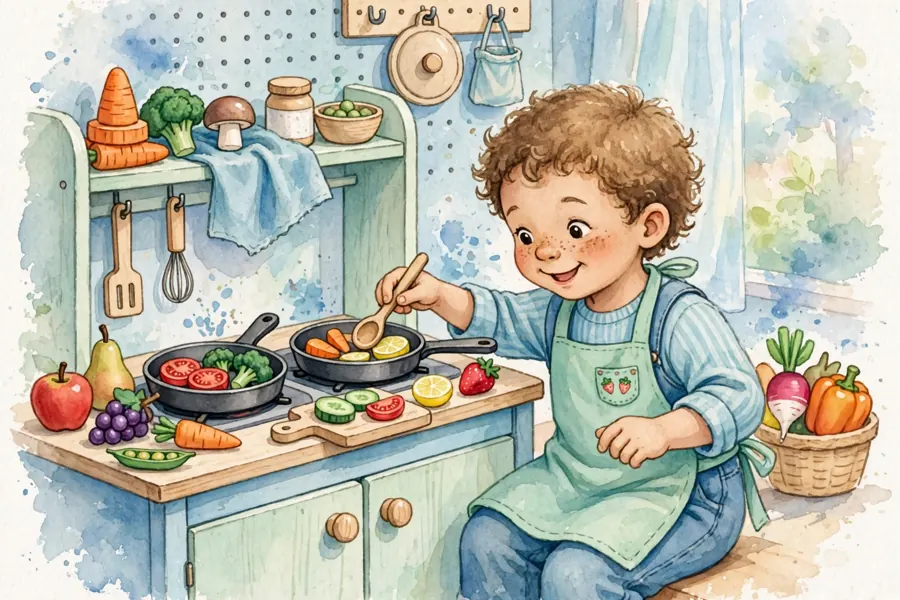
- Let food be playful away from meals. Pretend cooking, playing with real foods outside mealtimes — washing vegetables, stirring, squashing soft fruit — and helping with simple food preparation all build familiarity without any pressure to eat.
Most importantly: only follow changes an assessing professional has recommended for your child. If your child’s therapist or doctor has advised particular foods, preparations, pacing or activities, they will have chosen them for your child and will show you exactly what to do. Do not copy another child’s plan, and do not start changes you have read about — including anything in general articles like this one — without discussing them with the professional who knows your child. Keeping a simple note of what your child eats, what goes well and what is difficult is genuinely useful to share at appointments.
When to seek help
Trust what you see — you know your child’s eating better than anyone. It is worth seeking advice if:
- Your child coughs or chokes regularly during meals or drinks, or their voice sounds wet or gurgly afterwards.
- Your child’s range of accepted foods is very limited, or is getting smaller over time.
- Your child gags frequently on textures that children around them manage.
- Meals regularly take a very long time, or have become a source of distress or anxiety for your child or the family.
- Your child is not progressing with textures, chewing or drinking skills.
- You are worried about your child’s weight, growth or nutrition — or a health professional has raised concerns about these.
- Your child has repeated chest infections, which can sometimes be linked with swallowing difficulties.
- You simply feel worried. You do not need to be certain before asking.
Some situations need prompt medical help. Seek medical advice the same day if your child has repeated chest infections, seems unwell, or you are concerned about their weight or growth. One situation is an emergency: if your child is choking and cannot clear it, is having difficulty breathing, or their lips or face are turning blue, call your local emergency number immediately.
The usual first step is to talk to your child’s doctor or another health professional, or to your health visitor if you have one. You can also contact a speech and language therapist directly in many places. For general information, you can visit the American Speech-Language-Hearing Association (ASHA) or the World Health Organization, or follow your national health authority’s guidance. Our hub for children and parents also brings together our guides on supporting children at home.
Questions to ask a therapist
If you arrange a feeding assessment or a first appointment, these questions can help you feel prepared:
- What will the assessment involve, and should we bring particular foods or drinks from home?
- What did you notice about my child’s chewing, mouth movements and swallowing?
- Is a closer, hospital-based look at my child’s swallow needed, and how would that be arranged?
- What changes, if any, do you recommend for our mealtimes — and can you show us exactly what to do?
- Which other professionals should be involved, such as a dietitian or our child’s doctor?
- What signs should make us seek medical help quickly, and when will we review progress together?
Frequently asked questions
Is fussy eating the same as a feeding difficulty?
No. Fussy eating is a common phase for young children, and most children gradually widen the foods they accept. A feeding difficulty is broader or more persistent — it may involve chewing skills, sensory responses, swallowing safety, appetite or distress at mealtimes, and it affects the child’s safety, growth, variety or family life. If you are unsure which you are seeing, an assessment can explore the pattern with you.
Why does my child gag on some foods?
Gagging is a protective reflex — the body’s way of keeping food away from the airway while a child learns to manage it. Young children gag more easily than adults, and occasional gagging while learning new textures is common. Frequent gagging on everyday textures, gagging that seems to be increasing, or gagging alongside coughing or distress is worth discussing with a professional, who can look at chewing, textures and sensory responses together.
My child coughs when drinking. Should I change their drinks?
Please do not change your child’s drinks — or any part of their diet — on your own. Coughing when drinking can be a sign that swallowing needs assessment, and changes that help one child can be unsafe for another. Arrange an assessment promptly, describe what you have noticed, and only follow changes that the assessing professional recommends for your child.
What happens at a feeding assessment?
The therapist talks with you about your child’s history and your concerns, watches your child eat and drink familiar foods, and checks how their mouth moves and how they chew and swallow. Sometimes a hospital-based check of the swallow is suggested as well. Afterwards, the therapist explains what they found and recommends next steps shaped around your child.
Will my child grow out of feeding difficulties?
Some fussy phases pass as children grow and gain experience with food. Difficulties that involve swallowing safety, very restricted eating, growth concerns or a lot of distress usually benefit from assessment and support rather than waiting. Every child is different, and progress varies — support aims to make eating safer, more comfortable and more enjoyable, step by step.
Can feeding difficulties be connected with speech?
They can sit alongside each other, because eating and speaking use many of the same structures — lips, tongue, jaw and cheeks. A child with oral-motor difficulties may have challenges in both areas, though many children have difficulties in one area only. A speech and language therapy assessment can look at feeding and communication together, so support is joined up.
Related guides
- Fussy eating vs feeding disorder: how to tell the difference
- Signs of feeding difficulties in children: a parent guide
- Support for children and parents: the For Kids and Parents hub
- Speech and language therapy services for children
- Browse all conditions and topics
A gentle next step
Feeding difficulties can make everyday life feel hard, and you do not have to work out what they mean on your own. If you would like to talk about your child’s eating, drinking or swallowing — what you have noticed, what you are unsure about, and what might help — you are very welcome to get in touch online. There is no obligation and no pressure: just a friendly first conversation, at your pace.
By Hamayal Adnan, Speech-Language Pathologist
This article is for general educational purposes only and is not medical advice. It does not replace an assessment by a qualified speech and language therapist or other healthcare professional. Every person is different. If you have concerns about speech, language, feeding or swallowing, please seek professional advice. In an emergency, call your local emergency number.