

Pragmatic language is the social side of communication: how we use words, tone and body language to connect with other people. It includes taking turns in conversation, choosing and keeping a topic, understanding jokes and sayings that do not mean exactly what they say, and adjusting how we speak depending on who we are talking to. It is less about which words a person knows, and more about how language is shared between people.
A child or adult can have clear speech and a wide vocabulary, yet find this social side of language harder to read — or use it in a way that differs from what others expect. This article explains what pragmatic language is, how differences can look in children and adults, and how families and schools can offer support.
Key Takeaways
- Pragmatic language is language used socially: conversation, topics, body language, humour, and adapting to different people and situations.
- It is separate from vocabulary and grammar. A person can know many words and still find the unwritten rules of conversation harder to work out.
- There is no single “right” amount of eye contact, chat or small talk. Culture, personality and comfort all shape how people communicate, and differences are not wrong.
- Children and adults can both have pragmatic differences, including some autistic people and some people with ADHD.
- Gentle support — explaining unwritten social rules openly, practising through play and everyday talk, and patient communication partners — can make social communication feel easier and more enjoyable.
On this page
- What pragmatic language means
- The main parts of pragmatic language
- How pragmatic differences can look
- Pragmatic language, autism and ADHD
- Supporting social communication at home and school
- What assessment and therapy usually involve
- When to seek help
- Questions to ask a therapist
- Frequently asked questions
- Related guides
What pragmatic language means
Language has building blocks: sounds, words and sentences. Pragmatics is what we do with those building blocks when we are with other people — greeting a neighbour, chatting with a friend, telling a story, asking for help, comforting someone, or telling a joke.
The same words can mean different things depending on the situation and the speaker’s tone. “That’s just what I needed” can be a genuine thank you, or — said with a sigh after something spills — the opposite. Understanding which meaning is intended, from context and tone, is pragmatic understanding at work.
Most of these social rules are never taught directly; children tend to absorb them by watching and joining in. For some people, though, the rules do not come automatically — they are easier to learn when someone explains them openly, the way you might explain the rules of a board game. Needing the rules explained is not a fault, just a different route to the same understanding. The rules themselves are flexible rather than rigid, and they shift between families, friendships, cultures and generations.
The main parts of pragmatic language
Pragmatic language is not one skill but a bundle of related ones. Looking at the parts separately makes the whole picture clearer.
Conversation and turn-taking
Conversation is a shared activity, a bit like passing a ball back and forth. Pragmatic skills include knowing roughly when to speak and when to listen, how to start a conversation, how to show you are listening, how to ask questions that keep things going, and how to put things right when someone has not understood — plus recognising when a conversation is finishing, and ending it comfortably.
Choosing and keeping a topic
Conversations usually have a topic, and part of the social skill is choosing one your listener shares an interest in, staying roughly with it, and noticing signals that the other person wants to move on. Everyone drifts off topic sometimes, and everyone talks longest about the things they love most. A difference here is not about having interests — passionate interests are a strength and a joy, and often the best starting point for connection.
Body language, eye contact and personal space
A great deal of meaning travels without words: facial expressions, gestures, posture, tone of voice, and how close we stand. Eye contact is one small part of this, and it varies enormously — between cultures, between families, and between individuals. Some people find looking at faces helpful; others listen better when they are looking somewhere else, and find direct eye contact uncomfortable or even distracting. There is no correct amount of eye contact, and comfortable communication does not depend on it. What matters is that each person can listen and respond in the way that works for them.

Jokes, idioms and sayings that do not mean what they say
Everyday language is full of expressions that mean something different from their literal words: “it’s raining cats and dogs”, “break a leg”, “hold your horses”. Sarcasm, teasing and hints work the same way — “it’s cold in here” may really mean “please close the window”, and the real message sits in the tone, not the words. These are confusing if you take words at face value, and there is no shame in finding them so. They can be explained and collected, like new vocabulary — often, once a saying is explained, it becomes a favourite family joke.
Adapting to the listener and the situation
We all adjust how we speak: one way with a toddler, another with a close friend, another with a manager or a doctor. This means judging what the listener already knows, how much background to give, and how formal to be. It is sometimes called “reading the room”.
How pragmatic differences can look
Differences in pragmatic language vary a great deal from person to person. None of the examples below, on its own, means that anything is wrong, and they are described here simply to help you recognise patterns you may have noticed.
In children
- Talking at length and in rich detail about a favourite topic, without noticing that the listener has lost interest or is trying to join in.
- Taking sayings, jokes or teasing literally, and feeling puzzled or left out when others laugh.
- Finding small talk, playground chat or joining a group game harder than one-to-one conversation with a familiar adult.
- Asking very direct questions or making honest comments that others hear as blunt. This is directness, not rudeness: the child is saying exactly what they think.
- Finding turn-taking tricky: interrupting, because an idea feels urgent, or staying silent in groups because finding the right moment to speak feels impossible.
- Chatting happily and fluently at home about familiar things, yet seeming quiet or unsure in new social settings.
In adults
Pragmatic differences do not disappear at eighteen; adults simply develop their own ways of managing social life.
- Some adults recognise in themselves the same patterns described above, sometimes only later in life, and find the explanation a relief.
- Meetings, interviews and group social events can feel tiring, because so many unwritten rules have to be tracked at once.
- Many adults prefer direct, honest, one-to-one conversation, and find small talk hard work — a preference, not a failing.
- Occasionally, other people misread directness, a need for clarity, or a different conversation pace, and misunderstandings arise at work or in relationships. Those misunderstandings belong to the situation, not to one person’s character.
Pragmatic language, autism and ADHD
Social communication differences are part of how autism is generally described: many autistic children and adults experience conversation, non-literal language, and the unspoken expectations of social situations differently from non-autistic people. Not every autistic person communicates in the same way, and pragmatic differences on their own do not mean a child or adult is autistic.
It helps to remember that communication is a two-way street. A misunderstanding between an autistic person and a non-autistic person is something that happens between them — each may find the other’s style hard to read. That is why good support works on both sides: clearer information about social expectations for the person, and clearer, more patient communication from the people around them.
ADHD can affect pragmatic language in a different way. Attention and impulsivity shape conversation: a person may interrupt because a thought feels too important to hold, lose the thread of what was being said, or talk quickly and at length. These are effects of attention, not of not caring about the listener.
A speech and language therapist does not diagnose autism or ADHD. Their role is to understand and describe a person’s communication in detail, and to support it. If you are wondering about diagnosis, a doctor is usually the first step, and a therapist’s observations can form part of the wider picture. General information about social communication is also available from the American Speech-Language-Hearing Association (ASHA).

Supporting social communication at home and school
Support for pragmatic language is mostly about making the unwritten rules visible, and making environments kinder and clearer for everyone. These are general ideas, not a personalised programme.
- Say the rules out loud. Explain jokes, idioms, hints and social expectations plainly and kindly, as they come up: “When Grandma says ‘we’ll see’, she usually means probably not.”
- Wonder aloud together. Stories and programmes are full of social situations. Pausing to wonder what a character meant, how they might feel, or why the others laughed practises social understanding in a relaxed way.
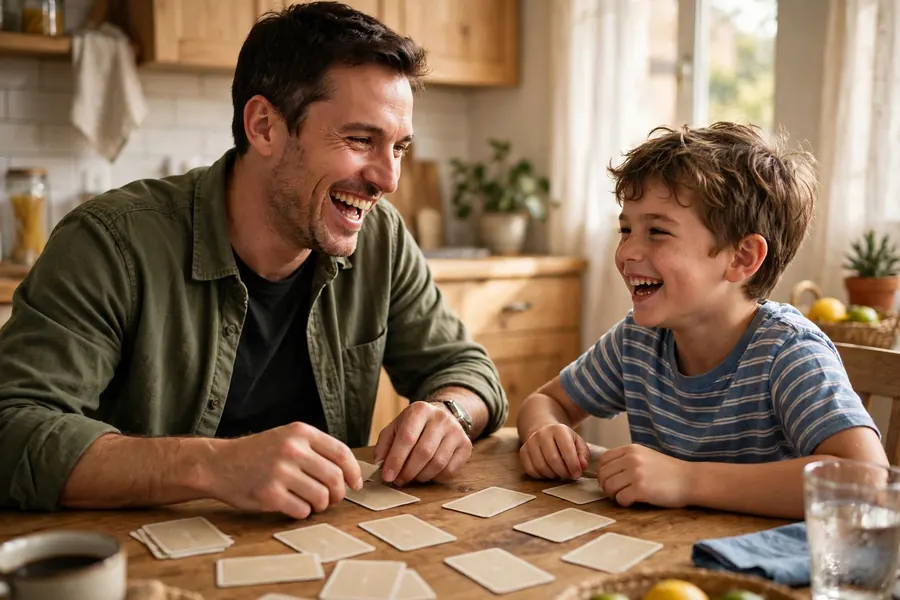
- Practise through play. Card and board games naturally practise turn-taking, waiting, winning and losing. Role play and pretend games let children try out conversations safely, with a trusted adult joining in as a fellow player rather than a teacher.
- Follow the person’s interests. Conversation flows most easily around things someone loves. Shared interests are the foundation of most friendships, for children and adults alike — build on them rather than steering away from them.
- Agree gentle signals. Some families agree a quiet word or sign that means “let’s change the topic” or “someone else wants a turn”, so feedback in the moment feels friendly rather than like criticism.
- Give time and space. One speaker at a time, a calmer setting, and time to gather thoughts all make conversation more accessible. Silence while someone thinks is not a problem to fill.
- Help school help. Teachers can explain group-work expectations in advance, offer structured roles within group tasks, and check understanding privately rather than in front of the class. Strategies that work at home are worth sharing with school, and the other way round.
- Respect each person’s own style. The aim is confidence and connection, not sameness. Support should never mean forcing eye contact, suppressing a direct communication style, or teaching a child to hide who they are. Understanding the rules gives a person choices; what they choose remains theirs.
What assessment and therapy usually involve
A speech and language therapy assessment of pragmatic language usually looks at how a person communicates in real life, not only in test tasks. It may involve conversation and play, observation in different situations, and discussion with the person themselves and with family or school, because social communication can look different across settings. The therapist builds a picture of strengths as well as needs — what the person already does well socially is the foundation for everything else.
Therapy, where it is recommended, is planned individually. In general terms, it might include exploring social rules and non-literal language openly together, practising conversation skills in a safe setting, working on goals the person has chosen — joining a group, chatting with classmates, feeling more confident at work — and coaching communication partners, so home and school become easier for everyone. Progress varies, and goals are reviewed and adjusted with you over time.
When to seek help
It is worth seeking advice about pragmatic language if:
- Social communication is affecting friendships, confidence, school or work.
- Your child often seems distressed, left out or confused in social situations, or social times frequently end in tears.
- Your child seems to understand much less of everyday conversation than other children of a similar age.
- Everyday misunderstandings are causing friction at home, and you would like strategies that help everyone.
- You simply feel unsure. Asking for an assessment is a reasonable step in itself; you do not need to be certain that anything is wrong first.
One pattern deserves prompt advice at any age: losing skills. If a child or adult stops using communication or social skills they had before, seek professional advice promptly.
One situation is an emergency. If someone suddenly loses speech, their face suddenly droops on one side, they have sudden weakness, or they are choking or having difficulty breathing, call your local emergency number immediately.
The usual first step is to talk to your child’s doctor or teacher, or your own doctor, who can point you towards a speech and language therapy assessment. In many places you can also contact a speech and language therapist directly. For general information, visit the World Health Organization and the American Speech-Language-Hearing Association (ASHA).
Questions to ask a therapist
These questions can help you feel prepared for an assessment or first appointment:
- How does my child use language socially at the moment, and what are their social communication strengths?
- Which parts of social communication would you suggest we support first, and why?
- How can we explain unwritten rules — jokes, hints, idioms — in a way that suits my child?
- How can home and school support conversation and friendships consistently?
- What goals would you suggest, and how will we review them together?
Frequently asked questions
What is the difference between pragmatic language and vocabulary?
Vocabulary is the words a person knows, and grammar is how they build sentences. Pragmatic language is how they use all of that socially: taking turns, keeping a topic, understanding jokes and tone. A child can do very well on word tests and still find everyday chit-chat hard to read.
Is needing less eye contact a problem?
No. Eye contact varies with culture, family, personality and comfort, and some people genuinely listen better when they are not looking directly at a face. Forcing eye contact can make listening harder, not easier. What matters is connection and understanding, which can happen in many ways — through words, responses and shared attention — whether or not eyes meet.
Does a pragmatic language difference mean my child is autistic?
Not necessarily. Social communication differences can appear for many reasons, and on their own they do not diagnose anything. Some autistic children do communicate in these ways, and some children who communicate in these ways are not autistic. If you are wondering, talk to a doctor or assessment professional; a speech and language therapist can describe your child’s communication in detail, which may form part of that wider picture.
Can adults have pragmatic language differences too?
Yes. Social communication is lifelong, and adults can find parts of it — group conversation, small talk, hints and sarcasm, interviews and meetings — harder than others do, whatever their age. Some adults only recognise the pattern in themselves later in life. Support for adults might include exploring how conversation works and planning strategies for situations that matter to them, such as work or social events.
Will support try to change who my child is?
It should not. Good support never aims to change a child’s personality or teach them to hide who they are. The aim is understanding: making unwritten rules visible so your child can choose how to respond, and helping the people around them communicate more clearly and kindly too. A child who understands the rules of a game can decide how they want to play it — that is confidence, not conformity.
How can I explain an idiom or a joke to my child?
Simply and warmly, as it comes up: say what the expression really means, give an everyday example, and keep it light. “When people say ‘hold your horses’, they don’t mean real horses — they mean wait a moment.” Some children enjoy collecting expressions in a notebook — treat it as a code to crack together, never as a mistake to correct.
Related guides
- Autism, ADHD and social communication: a complete guide
- How to support a non-speaking child
- What is AAC? Augmentative and alternative communication explained
- Support for children and parents: the For Kids and Parents hub
- Get in touch online
A gentle next step
Understanding pragmatic language often brings relief: the social rules of conversation are learnable, explainable, and kinder once they are out in the open — for the person themselves and for everyone who talks with them. If you would like to talk about your child’s social communication, or your own, you are very welcome to get in touch online. There is no obligation and no pressure: just a friendly first conversation, at your pace.
By Hamayal Adnan, Speech-Language Pathologist
This article is for general educational purposes only and is not medical advice. It does not replace an assessment by a qualified speech and language therapist or other healthcare professional. Every person is different. If you have concerns about speech, language, feeding or swallowing, please seek professional advice. In an emergency, call your local emergency number.