

Signs of social communication difficulty in children can include finding turn-taking in conversation tricky, reading facial expressions and tone of voice differently from other children, struggling to join in play or keep friendships going, or taking jokes and sayings very literally. Every child communicates in their own way, and any one sign on its own may mean very little — what matters is the overall pattern, and how it affects your child’s everyday life.
Social communication is about connection: chatting, playing, making friends, sharing news and feelings. Some children find this side of communication harder to work out than others, and the signs are not the same for every child. This article describes common signs grouped by area — conversation, non-verbal communication, play and friendship, and understanding social situations — so you can recognise patterns you may have noticed.
Key Takeaways
- Social communication is how children use language and body language to connect: conversation, play, friendship and understanding other people.
- Signs can appear in one area or several, and they vary a great deal — there is no single picture that fits every child.
- Signs often look different at different ages, because social expectations grow as children do.
- A sign is an observation, not a verdict. Many things can explain the same picture, including shyness, hearing, language development and temperament.
- Only a proper assessment can explore your child’s communication in detail. If social communication is affecting friendships, confidence or school, seek advice.
On this page
- What social communication means
- Signs in conversation
- Signs in non-verbal communication
- Signs in play and friendship
- Signs in understanding social situations
- How signs can look at different ages
- What these signs can mean — and what they do not
- Supporting your child day to day
- When to seek help
- Questions to ask a therapist
- Frequently asked questions
- Related guides
What social communication means
Social communication brings together words, tone of voice, facial expressions, gestures and timing, all in the service of connecting with other people. It includes starting and keeping a conversation going, playing and cooperating with others, telling what someone might be feeling, and adjusting what you say depending on who you are with.
Most children absorb these unwritten rules gradually, by watching and joining in. For some children, though, the rules are harder to pick up by watching alone — they may be easier to learn when someone explains them openly. That is a difference in how a child learns social communication, not a reflection of how much they care. A child who finds playground chat hard may care deeply about friends and want very much to join in; the difficulty lies in reading and using the signals, not in feeling.
Our guide to pragmatic language — the social use of language explains these skills in more depth.
Signs in conversation
Conversation is where social communication is most visible. Signs in this area might include:
- Finding turn-taking tricky. Your child may talk over others because an idea feels too urgent to hold, or may rarely join in group conversation because finding the moment to speak feels impossible. Both patterns are common, and both can leave a child out of the flow of chat.
- Talking at length about a favourite topic. Many children speak in enthusiastic detail about the things they love, without noticing the listener has lost interest or is trying to add something. Passionate interests are a strength — the sign is in missing the listener’s signals, not in having the interest.
- Difficulty keeping a conversation going. Chat may feel one-sided: your child answers questions but rarely asks any back, or jumps between topics in ways others find hard to follow.
- Taking words literally. Instructions, jokes and sayings may be understood exactly as spoken. “Pull your socks up”, or a teasing remark between friends, can puzzle or upset a child who takes language at face value.
- Unusual volume or tone. Some children speak much more loudly or quietly than the situation calls for, or in a flatter tone, without realising how it sounds to listeners.
- Trouble repairing misunderstandings. When someone has not understood, your child may repeat the same words in the same way rather than explaining differently, or become frustrated when others do not follow their meaning.
None of these, alone, tells you very much. Lots of children interrupt, talk about dinosaurs for half an hour, or miss a joke. The pattern matters more when several appear together, often, and across different settings.

Signs in non-verbal communication
A large part of every message travels without words. Signs in this area might include:
- Reading facial expressions differently. Your child may not notice that a friend looks bored, upset or keen to speak, or may find it hard to tell teasing apart from unkindness from tone alone.
- Using gestures less, or differently. Pointing to show you something, waving, shrugging and nodding are all part of everyday communication. Some children use fewer of these signals, or use them in their own way.
- Eye contact that differs. Some children look away while listening — for many, this helps them concentrate on the words. There is no correct amount of eye contact, and communication does not depend on it. This is only one small part of a bigger picture.
- Personal space and touch. Your child may stand very close to others or hug people they have just met — or, at the other end, dislike unexpected touch and need more space than peers.
- Showing rather than telling. Some children bring objects, lead adults by the hand, or act things out instead of explaining in words — resourceful ways of communicating worth noticing and valuing, especially in younger children.
Signs in play and friendship
Play is where young children do most of their social learning, and friendship is where older children test it out. Signs in this area might include:
- Preferring to play alongside rather than with others. Your child may happily play near other children, absorbed in their own game, but find joining in or following another child’s ideas much harder.
- Finding group games tricky. Games with unwritten rules — who is “it”, when teams change, how disputes are settled — can be confusing, especially when rules shift mid-game.
- Difficulties with pretend play. Some children prefer factual or constructive play to make-believe, or enjoy pretend play most when they direct the whole story themselves.
- Friendships that falter. Your child may long for friends yet find the give-and-take of friendship — invitations, compromises, making up after arguments — hard to manage. Friendships might be intense and brief, or mostly with younger or older children, or with adults.
- Being left out or misunderstood. Other children may misread your child’s directness or different play style, and your child may end up on the edge of the group without understanding why.
It is important to say plainly: preferring time alone, having one close friend rather than a crowd, or loving solitary hobbies are all perfectly healthy. The sign is not how social a child is — it is when a child wants connection and repeatedly finds it slipping out of reach.

Signs in understanding social situations
Beyond conversation and play, some children find the social world itself harder to decode. Signs might include:
- Missing hints and indirect requests. “It’s cold in here” may be heard as a weather report rather than a request to close the window. Indirect language is confusing if you take words at face value.
- Difficulty predicting how others will react. Your child may be surprised that a remark upset a friend, or unable to explain why someone behaved as they did.
- Trouble with stories and explanations. Following who did what and why in a story — or retelling an event in an order a listener can follow — can be harder, because it involves judging what the listener already knows.
- Black-and-white thinking about rules. Rules may be followed very strictly, with real distress when others break them or routines change without warning.
- Social tiredness. Keeping track of unwritten rules takes effort. Some children hold everything together at school and then unravel at home, exhausted — a pattern parents often notice first.
How signs can look at different ages
Social communication develops over childhood, and what counts as a “sign” shifts with it, because expectations grow alongside the child:
Younger children
Early social communication is mostly non-verbal: sharing attention, pointing to show you things, waving, turn-taking games like peekaboo. Signs at this age might include less back-and-forth interaction than expected, fewer gestures, or play that stays solitary even when other toddlers are nearby. Young children vary enormously, though, and development follows no strict timetable.
Primary-school years
As classrooms and playgrounds demand more, signs often become clearer: conversation and group work difficulties, literal understanding, friendship troubles, distress at rule changes. A child may chat confidently with adults yet struggle with the fast, shifting talk of peers.
Older children and teenagers
Social life becomes more subtle — group chats, sarcasm, hints, shifting alliances. Signs might include finding group banter exhausting, misreading messages and tone online, or feeling on the outside of friendship groups despite wanting to belong. Some teenagers only recognise the pattern in themselves at this stage, which can be a relief as much as a worry: an explanation replaces years of self-blame.
At every age, the question to hold in mind is the same: is this affecting my child’s happiness, friendships, confidence or learning? If it is, the pattern is worth exploring, whatever your child’s age.
What these signs can mean — and what they do not
Social communication differences can be part of several different pictures. They are commonly discussed alongside autism, ADHD and social communication: many autistic children experience conversation and unspoken social expectations differently, and attention differences in ADHD can shape turn-taking and listening in their own way. Differences can also appear alongside language difficulties, hearing differences, anxiety, or a quieter temperament — and sometimes there is no neat label at all.
This is why no checklist can tell you what is happening for your child. The same sign can have several explanations, and only an assessment — looking at the whole child, in context — can put the pieces together. A speech and language therapist does not diagnose autism or ADHD; their role is to describe communication in detail and support it, and their observations can contribute to a wider assessment led by a doctor.
What the signs do not mean: they do not mean your child is rude, lazy or not trying, and they do not mean you have done anything wrong as a parent. Nor do they predict your child’s future — children grow, learn and find their people in many ways, and understanding is the first step towards the right support.
Supporting your child day to day
While you are deciding what to do next — or waiting for an appointment — small everyday things can help social communication feel kinder and clearer:
- Explain the unwritten rules openly. Say plainly what hints, jokes and social expectations mean, as they come up: “When your cousin says ‘we’ll see’, she usually means probably not.”
- Wonder aloud together. Pause during stories or programmes to wonder what a character meant and how they might feel. This practises social understanding in a relaxed way.
- Build on interests. Conversation flows easiest around things your child loves. Shared interests are the foundation of most friendships — join in rather than steering away.
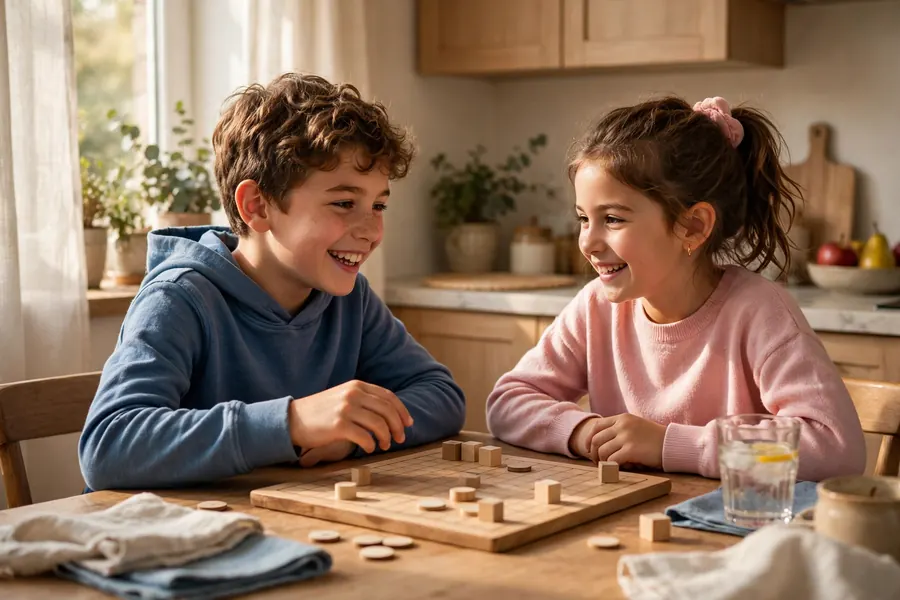
- Keep groups small and structured at first. One friend and a shared activity with clear turns — a board game, baking, building something — is often an easier setting for connection than a large, noisy group.
- Give processing time. One speaker at a time, calmer settings and unhurried replies make conversation more accessible. Silence while your child thinks is fine.
- Work with school. Share what works at home, and ask what teachers see. Advance warning of group-work expectations, and a named adult your child can go to, can both help.
When to seek help
It is worth seeking advice about social communication if:
- The pattern described above sounds familiar and appears across settings — at home, at school and with friends.
- Social communication is affecting your child’s friendships, confidence, learning or happiness.
- Your child often seems distressed, left out or confused in social situations, or social times regularly end in tears.
- Misunderstandings are causing friction at home or school, and you would like strategies that help everyone.
- Your child seems to understand noticeably less of everyday conversation than other children of a similar age.
- You simply feel unsure. Asking for an assessment is a reasonable step in itself; you do not need to be certain first.
One pattern deserves prompt advice at any age: losing skills. If a child stops using communication or social skills they had before, seek professional advice promptly.
One situation is an emergency. If someone suddenly loses speech, their face suddenly droops on one side, they have sudden weakness, or they are choking or having difficulty breathing, call your local emergency number immediately.
The usual first step is your child’s doctor or teacher, who can point you towards a speech and language therapy assessment; in many places you can also contact a therapist directly. If your child finds speaking itself difficult, our guide to supporting a non-speaking child and our explanation of AAC may also help. General information is available from the American Speech-Language-Hearing Association (ASHA).
Questions to ask a therapist
These questions can help you get the most from an assessment or first appointment:
- How does my child communicate socially at the moment, and what are their social communication strengths?
- Which areas — conversation, play, understanding situations — would you suggest we support first, and why?
- How can we explain unwritten rules, jokes and hints in a way that suits my child?
- How can home and school work together so support feels consistent?
- What goals would you suggest, and how will we know things are improving?
Frequently asked questions
My child talks non-stop about their favourite topic. Is that a sign?
On its own, not necessarily — deep, enthusiastic interests are common in childhood and are a real strength. It becomes more meaningful as part of a wider pattern: if your child also finds it hard to notice when a listener wants to join in or move on, or is finding friendships difficult. Look at the whole picture rather than any single sign.
My child makes friends easily but cannot keep them. What might that mean?
Friendships involve give-and-take: choosing activities together, handling disagreements, repairing things after an argument. Some children find starting friendships easier than the ongoing negotiation friendships need, which can be part of a social communication difficulty — or can reflect shyness, anxiety or mismatched friendships. An assessment can help you understand which pieces are hard for your child.
Is avoiding eye contact a sign of social communication difficulty?
It can be one small part of a bigger picture, but it is not a sign on its own. Eye contact varies with culture, family, personality and comfort, and many children listen better when not looking directly at a face. Forcing eye contact can make listening harder. What matters is how your child communicates overall, not where their eyes are pointing.
Could these signs just be shyness?
They could. A shy child may be quiet with unfamiliar people yet communicate warmly once comfortable, and shyness itself is a temperament, not a problem. Social communication difficulty tends to look different: the difficulties appear even with familiar people, and involve understanding — reading signals, taking turns, working out hints — rather than confidence alone. If you are unsure which picture fits your child, an assessment can help you tell them apart.
Should I wait and see if my child grows out of it?
Children develop at very different rates, and some early social differences soften as children grow. But if social communication is affecting your child’s friendships, confidence or learning now, there is no benefit in waiting for certainty before asking. Seeking an assessment does not commit you to anything; it gives you information, so support can start from understanding rather than guesswork.
Does noticing these signs mean my child is autistic?
No. Social communication differences can be part of autism, but they can also appear alongside ADHD, language difficulties, hearing differences or anxiety, or on their own. A list of signs cannot diagnose anyone. If you are wondering about autism or ADHD, a doctor is usually the first step; a speech and language therapist can describe your child’s communication in detail as part of that wider picture.
Related guides
- Autism, ADHD and social communication: a complete guide
- What is pragmatic language? Social communication explained
- How to support a non-speaking child
- What is AAC? Augmentative and alternative communication explained
- Support for children and parents: the For Kids and Parents hub
- Get in touch online
A gentle next step
Noticing these signs usually means you know your child well and are paying close attention — that is a strength, not a worry. Understanding how your child experiences conversation, play and friendship can make home and school feel easier for everyone. If you would like to talk about your child’s social communication, you are very welcome to get in touch online. There is no obligation and no pressure: just a friendly first conversation, at your pace.
By Hamayal Adnan, Speech-Language Pathologist
This article is for general educational purposes only and is not medical advice. It does not replace an assessment by a qualified speech and language therapist or other healthcare professional. Every person is different. If you have concerns about speech, language, feeding or swallowing, please seek professional advice. In an emergency, call your local emergency number.