

Receptive language is a child’s ability to understand words and sentences — the listening side of communication. Long before children can say words themselves, they are busy making sense of the words they hear: recognising familiar names, following simple instructions and working out what everyday phrases mean. Understanding usually runs ahead of talking, and it forms the foundation that spoken words are later built on.
Parents often notice talking first, because words are easy to hear and celebrate. Understanding is quieter, and easier to miss — yet it is half of language, and often the half that arrives first. This page explains what receptive language is, how it differs from expressive language (the talking side), how understanding typically grows, the signs that it may be developing more slowly, and the everyday ways you can support it at home. It cannot say how your own child is developing, but it can help you notice the understanding that is already there.
Key Takeaways
- Receptive language means understanding: making sense of words, sentences, questions and instructions that other people say.
- Expressive language is the other half of language — the words and sentences a child uses to communicate. Understanding normally develops ahead of talking.
- Children understand words in familiar routines first, then gradually manage new words, longer instructions and stories.
- Signs understanding may be lagging include not responding to familiar words, relying on copying others or on routine cues, and difficulty following simple instructions without gestures.
- Everyday support is simple: talk through routines, offer real choices, follow your child’s lead, cut down background noise and share books together.
- If you are worried about your child’s understanding, trust your instincts and seek advice — understanding difficulties are less visible than late talking, but just as worthy of support.
On this page
- What receptive language is
- Receptive and expressive language: the two halves of language
- How understanding usually grows
- Signs understanding may be developing more slowly
- Everyday ways to support understanding
- When to seek help
- Questions to ask a therapist
- Frequently asked questions
- Related guides
What receptive language is
Receptive language covers everything a child takes in and makes sense of. It includes recognising the names of familiar people and objects, understanding everyday words such as “shoes”, “more” and “finished”, following instructions, answering questions, and eventually understanding stories, explanations and jokes. It also includes understanding how sentences work — the difference, for example, between “the dog is chasing the cat” and “the cat is chasing the dog” is carried entirely by word order, and a child has to take that in through listening.
The word “receptive” simply means receiving: this is language coming in, through listening (and, for children who use sign or pictures, through watching too). It is sometimes called comprehension, or understanding of language. Whatever the label, it is the quiet engine of communication: before a child can use a word meaningfully, they almost always need to have understood it first, often for some time.
Receptive language works so closely with hearing, attention and memory that difficulties in those areas can affect it. A child who cannot hear speech clearly has less chance to build understanding. This is one reason a hearing check is usually part of looking into any language concern. Our complete guide to child speech and language development explains how understanding fits within the wider picture of communication.
Receptive and expressive language: the two halves of language
It helps to think of language as having two directions. Receptive language flows inwards — understanding what others say. Expressive language flows outwards — the words, signs, gestures and sentences a child uses to send messages of their own.
The two halves develop together but rarely at exactly the same pace, and understanding almost always leads. You can see this clearly in everyday life:
- A toddler who cannot yet say “shoes” may still fetch theirs when you ask — the word is understood long before it can be said.
- A child may follow a familiar instruction, such as “time to wash hands”, while still speaking in single words.
- Children understand many more words than they use; everyone’s listening vocabulary is bigger than their spoken one, throughout life.
Because understanding leads, a child who is talking late but understanding well is in a different position from a child who is both talking late and understanding less than expected. This is why professionals always assess receptive language alongside expressive language, even when the referral is “not talking yet”. A child who points, responds to their name, follows everyday instructions and clearly understands a good deal at home has important strengths to build on. If understanding seems limited as well, that is useful information too — it simply suggests support may be needed on both sides of language. Our guide to the difference between a late talker and a speech delay explains how professionals weigh up this wider pattern.
How understanding usually grows
Understanding grows gradually, in layers, starting with far more than words. The pattern below is a broad picture, not a timetable — children vary in pace, and what matters is steady growth over time rather than any single moment.
First: voices, routines and familiar words
From the earliest months, babies are learning from sound: they recognise familiar voices, respond to the tone of speech, and begin to connect words with the routines around them. Long before a baby understands “bath time” as words, they may grow excited at the sound of running water and the sight of the bathroom — context is doing the work. Gradually, real word understanding joins in: familiar names and everyday words start to mean something, shown by a look, a turn of the head, or a reach towards the right person or thing.
Then: simple instructions in context
As understanding builds, children begin to follow simple, everyday instructions — “give it to Daddy”, “where’s your cup?”, “come here” — especially within familiar routines where gestures and context help. At this stage, a child may manage an instruction beautifully at home and look blank with the same words somewhere new, because routine and setting were quietly carrying much of the meaning. This is normal: understanding in context comes first, and understanding words on their own comes later.
Later: new words, longer instructions and stories
Over time, understanding becomes more flexible. Children follow instructions with more than one step, understand words outside their usual routine, take in questions about things that are not in front of them, and follow stories — first with pictures to support them, then increasingly by listening alone. Vocabulary keeps expanding in the background: every conversation, book and game adds words a child understands, many well before those words appear in the child’s own speech.

Throughout this growth, understanding stays ahead of talking. A child may understand a two-part instruction while still speaking in short phrases, and that gap is expected. What professionals look for is the gap steadily working in the right direction: understanding growing, and talking growing behind it. Our guide to typical speech and language milestones describes these broad patterns in both understanding and talking.
Signs understanding may be developing more slowly
Because understanding is quiet, delays here can be overlooked — a child may appear to manage, especially at home where routines are predictable. These signs suggest understanding may be lagging:
- Not responding to familiar words. Your child does not look, turn or react when their name is called — when hearing difficulties and simple distraction have been considered — or does not respond to very familiar everyday words.
- Coping through context, not words. Your child manages instructions mainly by watching what others do, following the group, or reading the routine, and is lost when the same words are used in a new situation or without gestures.
- Difficulty with simple instructions. Everyday single-step instructions that other children manage — “put it in the box”, “get your coat” — are frequently not followed, even when your child is listening and willing.
- Needing lots of repetition and showing. Instructions need to be repeated, simplified and demonstrated many times before they are understood, and new words seem slow to be taken in.
- A big gap between home and elsewhere. Your child seems to understand at home, where everything is familiar, but struggles noticeably in new settings where they cannot rely on routine.
- Understanding not growing. Over the months, the range of words and instructions your child understands is not obviously widening, even if talking is slowly increasing.
None of these signs, on their own, proves there is a difficulty — tiredness, distraction, ear infections and hearing difficulties can all produce a similar picture on a given day. The pattern over time is what matters. If several signs sound familiar and persistent, our guide to the signs of speech delay in toddlers explains the broader picture professionals consider, including understanding.
Everyday ways to support understanding
Understanding grows out of ordinary life — being talked with, listened to and involved, day after day. The ideas below are general information, not a programme; they simply make everyday conversation work harder for a developing listener.
- Talk through routines. Everyday routines — getting dressed, bath time, meals, leaving the house — repeat the same words in the same order, which is exactly how understanding takes root. Narrating them gently (“Shoes on. Now coat. Coat on, then outside”) connects words to actions your child can see and feel.
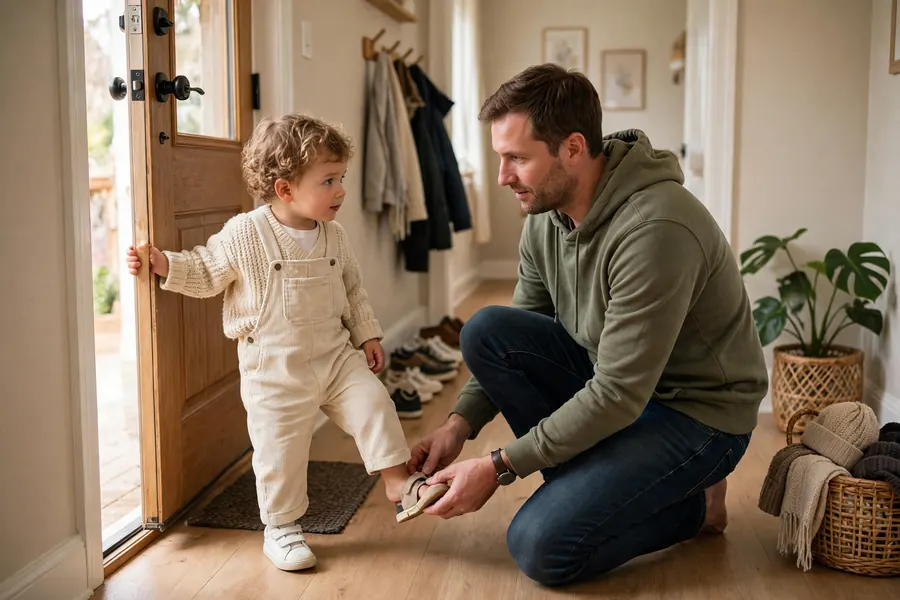
- Offer real choices. Holding up two things and asking “banana or apple?” gives your child a reason to listen and a way to answer — by reaching, pointing or looking — even before they can say the words. Choices make understanding visible, and show your child that listening pays off.
- Follow your child’s lead. Talk about what your child is already looking at, holding or playing with. Words that match a child’s current interest land far better than words that compete with it, and shared attention is where understanding grows fastest.
- Cut down background noise. Television, radio and household noise compete with your voice. Turning the volume down — or off — during conversations, meals and book time gives your child’s listening its best chance, especially if understanding is a concern.
- Keep your language simple and matched. Use short, clear sentences, just a little ahead of what your child understands, and stress the important words naturally: “Your cup. Here’s your cup.” Long explanations are harder to take in than a few well-chosen words repeated in real situations.
- Use gestures and showing alongside words. Pointing, demonstrating and showing the object as you name it all support understanding. These supports do not hold spoken language back — they are bridges into it, and can be faded as understanding grows.
- Share books together. Picture books are concentrated understanding practice: your child hears new words, matches them to pictures, and gradually follows simple story threads. Let your child choose the book, point at the pictures and turn the pages; even a few minutes of shared looking and naming, little and often, builds receptive vocabulary.

Above all, keep it enjoyable and unpressured. Understanding grows through thousands of small, friendly exchanges — not through testing. Questions such as “what’s this?” have their place, but commenting (“Look — a big bus!”) usually teaches more, because it hands your child words without demanding a performance in return.
When to seek help
It is worth seeking advice about your child’s understanding if:
- Your child does not seem to understand familiar words and simple instructions in everyday situations.
- Your child relies heavily on watching others, copying or routine to get by, and struggles when routines change.
- Understanding does not seem to be growing over the months, even if talking is making some progress.
- Your child has stopped understanding or doing things they could manage before — a loss of skills deserves prompt advice at any stage.
- Your child’s hearing seems inconsistent, they have frequent ear infections, or they often do not respond to sounds and voices.
- You simply feel concerned. Understanding difficulties are easy to miss from the outside; parents who notice them are usually noticing something real, and asking is a reasonable step at any point.
The usual first step is to talk to your child’s doctor or health visitor, who can arrange a hearing check and refer you to a speech and language therapist; in many places you can also contact a therapist directly. For general information, visit the World Health Organization and the American Speech-Language-Hearing Association (ASHA), or follow your national health authority’s guidance. Our For Kids and Parents section gathers more guides on children’s communication in one place.
One situation is an emergency, and it applies at any age. If a baby, child or adult is choking and cannot clear it, has difficulty breathing, or if someone suddenly loses speech, their face droops on one side, or they have sudden weakness, call your local emergency number immediately.
Questions to ask a therapist
If you arrange an assessment or a first appointment about your child’s understanding, these questions can help you feel prepared:
- What will the assessment of my child’s understanding involve, and is there anything we should bring?
- What have you noticed about my child’s understanding compared with their talking?
- Could hearing be part of the picture, and should it be checked if it has not been?
- Are the difficulties mainly with understanding, or with attention and listening as well?
- What can we do at home, within our everyday routines, to support understanding?
- When should we seek advice again if understanding is still slow to grow?
Frequently asked questions
What is the difference between receptive and expressive language?
Receptive language is understanding — the words, sentences and instructions a child takes in. Expressive language is what a child puts out: the words, signs and sentences they use to communicate. Understanding normally develops first and stays ahead of talking throughout childhood.
Can a child talk well but still struggle to understand?
Yes. Some children produce plenty of speech — even long, fluent-sounding sentences — while understanding less than their talking suggests. They may repeat phrases they have heard, answer questions by guessing from context, or struggle with instructions. This is one reason assessment looks at understanding directly rather than judging language by talking alone.
My toddler only follows instructions when I point. Should I be worried?
Pointing and gesture are natural supports, and young children rely on them while understanding is developing. The pattern to notice is whether reliance on them is gradually reducing as word understanding grows — and whether your child manages familiar instructions from words alone in familiar situations. If that does not seem to be happening over time, it is worth asking a speech and language therapist to look at the whole picture.
Does watching and copying others mean my child understands?
Not necessarily. Copying other children, following the group and reading routines are clever coping strategies, and they can make understanding look stronger than it is. A useful test is an unfamiliar instruction, said without gestures, in a situation where there is nothing to copy — how your child manages that tells you more about their word understanding.
Will using gestures or signs hold back my child’s understanding of spoken words?
No. Gestures, pointing and signs work alongside spoken words and support them — they give a child another way to take in and show meaning while listening skills develop. Children who are signed and gestured to are still hearing the words at the same time; the visual support makes those words easier, not harder, to understand.
When should I ask for help about understanding?
Whenever you are concerned — there is no need to wait for talking to fall behind. If your child persistently struggles with familiar words and simple instructions, is not making obvious progress in understanding over the months, or has lost skills they had, seek advice. A hearing check is often a sensible early step alongside a referral to a speech and language therapist.
Related guides
- Child speech and language development: a complete guide for parents
- First words: what counts as a baby’s first word?
- Typical speech and language milestones: broad patterns to look for
- Late talker or speech delay? How to tell the difference
- Babbling in babies: what it is and why it matters
A gentle next step
Understanding is the half of language nobody applauds — there is no first-understood-word day in the family calendar. Yet every word your child will ever say is being built on it, quietly, in routines, stories and everyday talk. If you would like to talk about your child’s understanding or communication, you are very welcome to get in touch online. There is no obligation and no pressure: just a friendly first conversation, at your pace.
By Hamayal Adnan, Speech-Language Pathologist
This article is for general educational purposes only and is not medical advice. It does not replace an assessment by a qualified speech and language therapist or other healthcare professional. Every person is different. If you have concerns about speech, language, feeding or swallowing, please seek professional advice. In an emergency, call your local emergency number.